
ATS Providers
ATSATS Providers are the dedicated professionals who act as the ultimate babysitters for pilots, ensuring we do not bump into each other in the big blue. From the friendly voice at Flight Service to the caffeinated master in the tower, they provide the essential surveillance, separation, and guidance that keeps the national airspace humming.
"Before pushing back from the gate, the captain contacted the local ATS provider to obtain an IFR clearance and confirm the current departure sequence."
Explained For Every Age ✈️
The same concept, told in 4 magical ways

In the big fluffy sky, the airplanes are like best friends playing tag. The special tower people are the referees who make sure everyone stays safe and happy on their fun adventures.
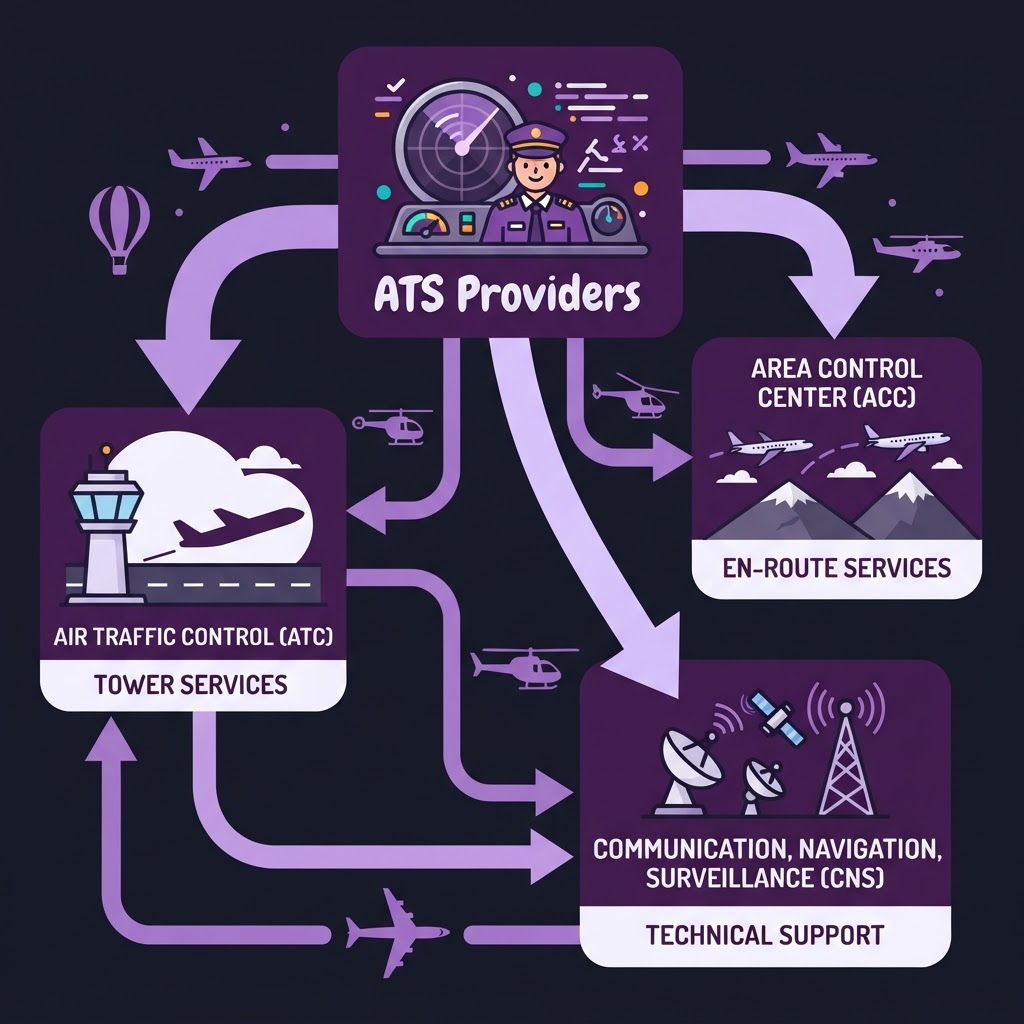
Imagine the sky is a giant puzzle where all the pieces are moving at high speeds. ATS providers are the master puzzle-solvers who guide every pilot to their destination without a single bump. They use radar screens and radio voices to keep everyone in the right spot at the right time.
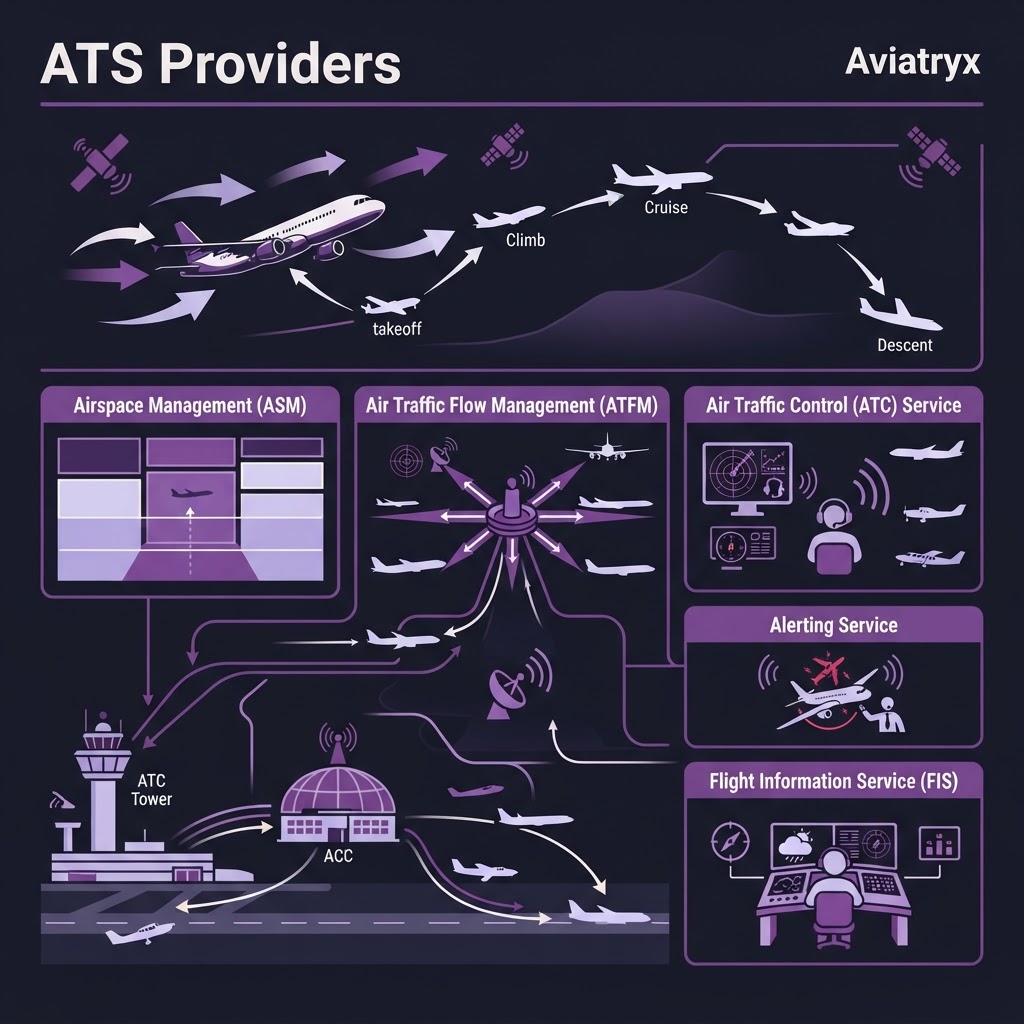
As a pilot, your primary job is to fly, but the ATS providers are the ground-based team managing the chaos of the sky around you. They function like an invisible traffic signal system, coordinating altitude and route changes to maintain safe separation between thousands of aircraft. When the weather gets messy, they are your best resource for navigating through complex patterns. Understanding their role is a critical step toward becoming a pilot who communicates effectively and flies with confidence.
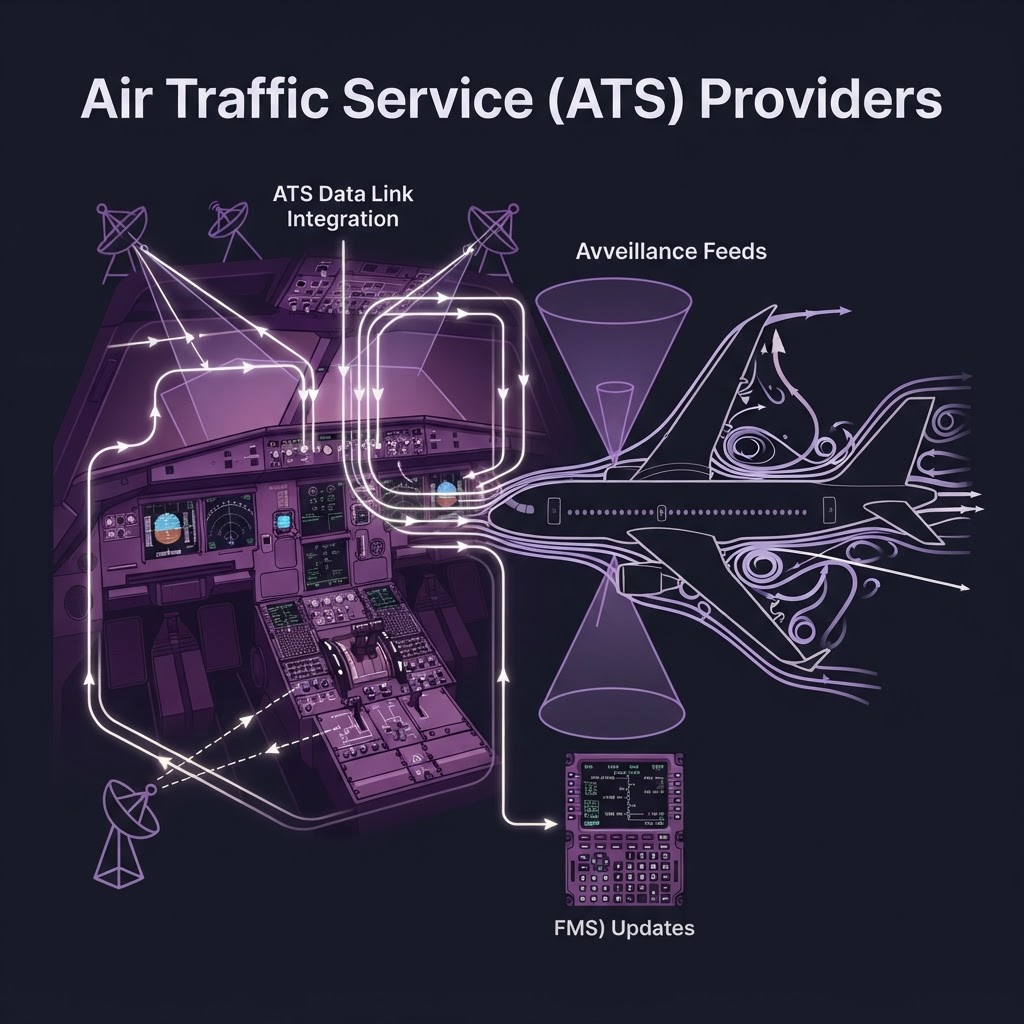
ATS providers, or Air Traffic Service providers, are the cornerstone of the National Airspace System, assuming responsibility for the tactical and strategic management of air traffic. These organizations or personnel provide essential services including ATC clearance delivery, flight information, and alerting services for aircraft in distress. Operating under strict regulatory frameworks like ICAO standards, they utilize complex surveillance technology and communication protocols to ensure procedural or radar-based separation. For an aviation student, understanding the specific hand-off procedures and communication etiquette with these providers is vital for safe cross-country operations. Mastery of ATS interactions facilitates seamless transitions through different classes of airspace, directly impacting flight safety and operational efficiency.